
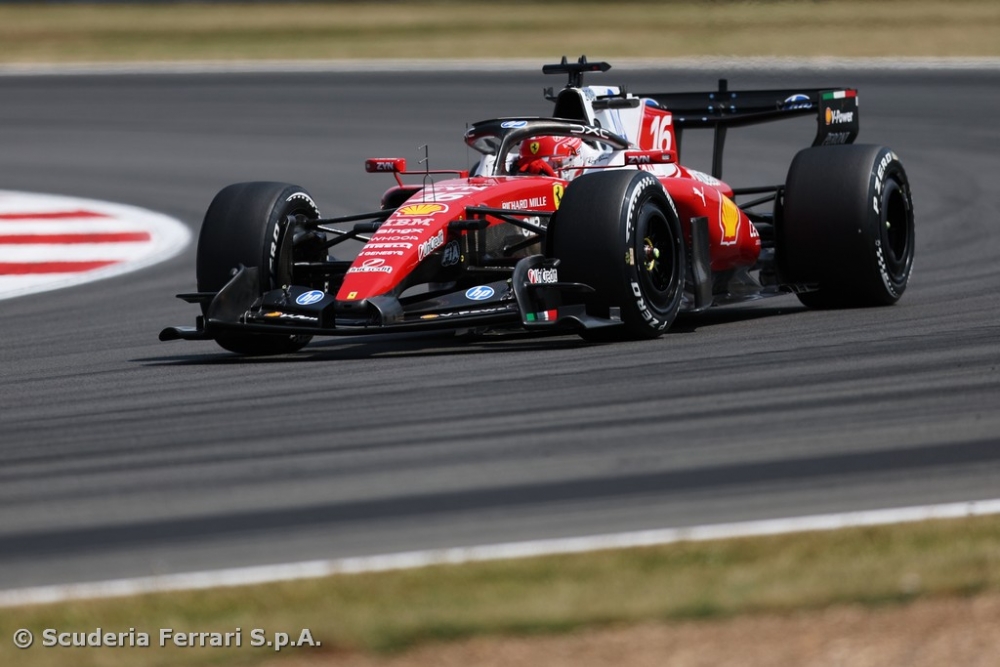
The World Championship heads to Baku this weekend for the Azerbaijan Grand Prix, the fifteenth round of the season. The circuit laid out on the streets of the Azerbaijani capital presents a unique challenge in Formula 1, combining extremely fast sections with very tight parts between the buildings of the historic city centre. The Baku City Circuit first appeared on the calendar in 2016, when the race was called the European Grand Prix, before becoming the Azerbaijan Grand Prix the following year.
A change to the schedule. This year’s race runs to an unprecedented timetable as the track action gets underway a day earlier than usual on the Thursday, with the Grand Prix itself taking place on Saturday. This is to avoid clashing with the solemn occasion of Azerbaijan’s Remembrance Day, held every year on 27th September.
Two sides to the circuit. Baku's 6.003 kilometre circuit features a mix of features that are not found at any other track. In the Old City, the track is very narrow, with the cars passing just centimetres from the walls. There is even a section where there is only enough room for one car at a time. It’s a completely different scenario towards the end of the lap: the final sequence of corners leads onto a straight that is over two kilometres long, taken flat out, all the way to the braking zone for Turn 1. In this section, top speed and slipstreaming can play an important role in both qualifying and the race.
Finding the right set-up to ensure the car performs well in both slow and fast sections will be key to the weekend. However, there is a further complication which is down to the street circuit's surface, which generally offers less grip than permanent venues and can lead to tyre graining. Wind is another variable, as it can change in both intensity and direction as it funnels between the buildings at different parts of the circuit.
An open race. The street circuit's characteristics have often contributed to action-packed races in Baku. In the nine Formula 1 events held so far, the Safety Car has been deployed twelve times, underlining the importance of maintaining a degree of strategic flexibility, as a neutralisation can quickly change the complexion of the race.
Pirelli has selected the C3 compound as Hard, C4 as Medium and C5 as Soft this weekend. Traditionally, Baku is a one-stop race. However, the track layout and the possibility of neutralisations mean other scenarios are also possible. For example, a Safety Car in the closing stages could make the Soft an interesting option for a short stint.
Timetable. Track action begins on Thursday with two free practice sessions, scheduled for 12.30 and 16.00 local time (10.30 and 14.00 CEST). On Friday, the third session starts at 12.30 (10.30 CEST), ahead of qualifying at 16.00 (14.00 CEST). The Azerbaijan Grand Prix gets under way on Saturday at 15.00 local time (13.00 CEST), run over 51 laps, for a total distance of 306.049 kilometres
The last few races have demonstrated that our car can deliver a good level of competitiveness, but they have also highlighted how important it is to put every part of the weekend together. Baku is a very specific challenge, where confidence in the car and execution are particularly important. It is also a circuit where the weekend can throw up several variables, so we need to stay focused on ourselves, adapt to whatever situations arise and make the most of every opportunity.
Fred Vasseur, Team Principal