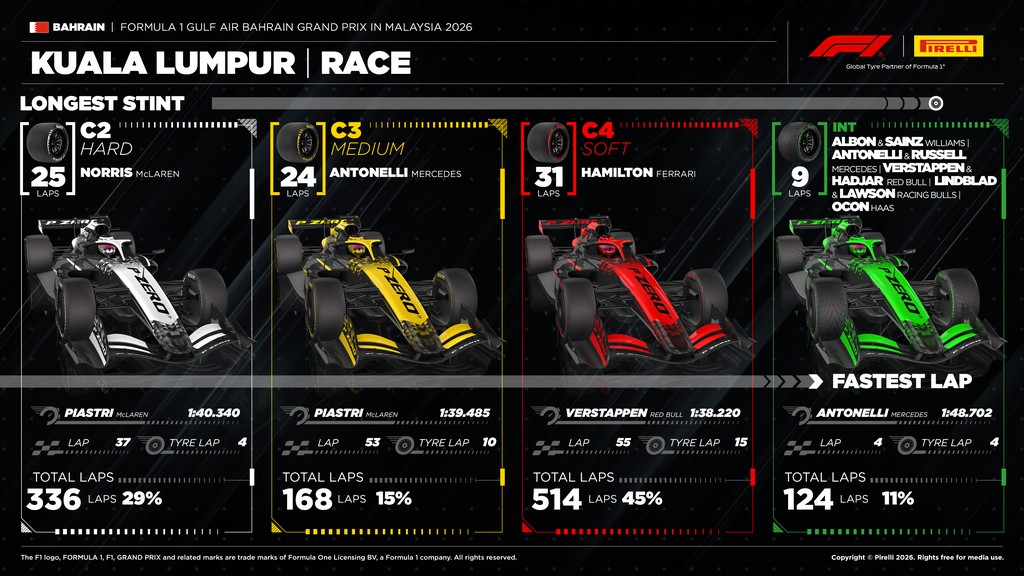


Max Verstappen claimed his first victory of 2026. The Dutchman took victory in the Bahrain Grand Prix, held at the Sepang circuit in Malaysia. It was also an important success for his team, marking Red Bull’s first win with an engine entirely designed and built in-house. Verstappen had to fight until the closing laps to secure the victory after a Safety Car bunched up the field in the final stages of the race.
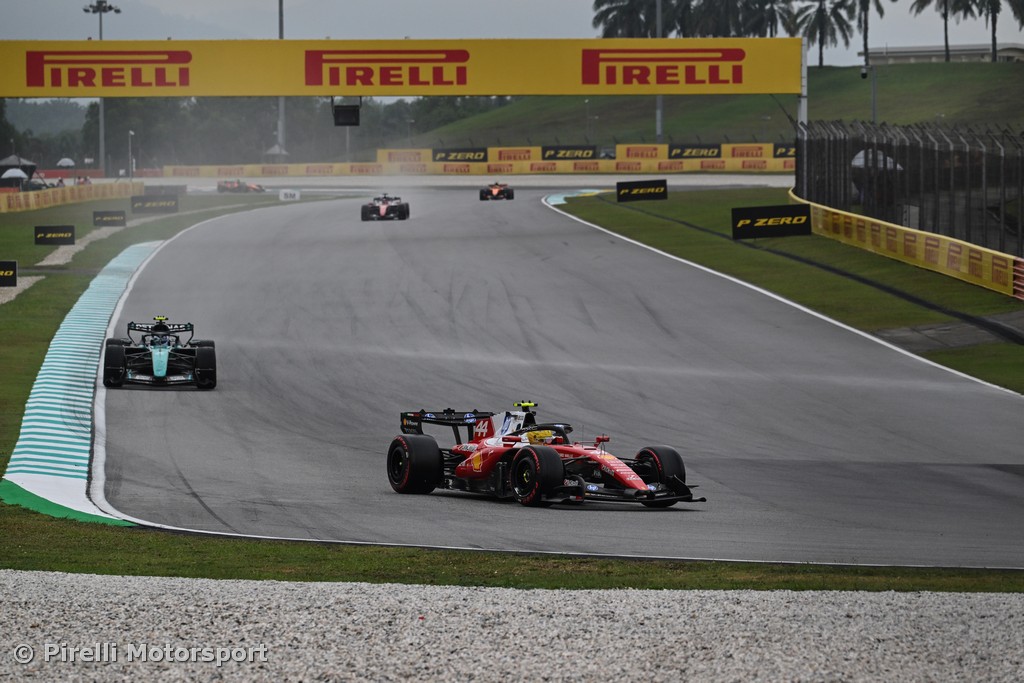
The Bahrain Grand Prix was full of incidents, starting with a delayed start. Race Control postponed the start due to standing water in several corners of the circuit. When the race finally got under way, still in difficult conditions, there was significant variation in tyre choices: nine drivers opted for Intermediates, while the remainder of the field selected either Softs or Mediums.
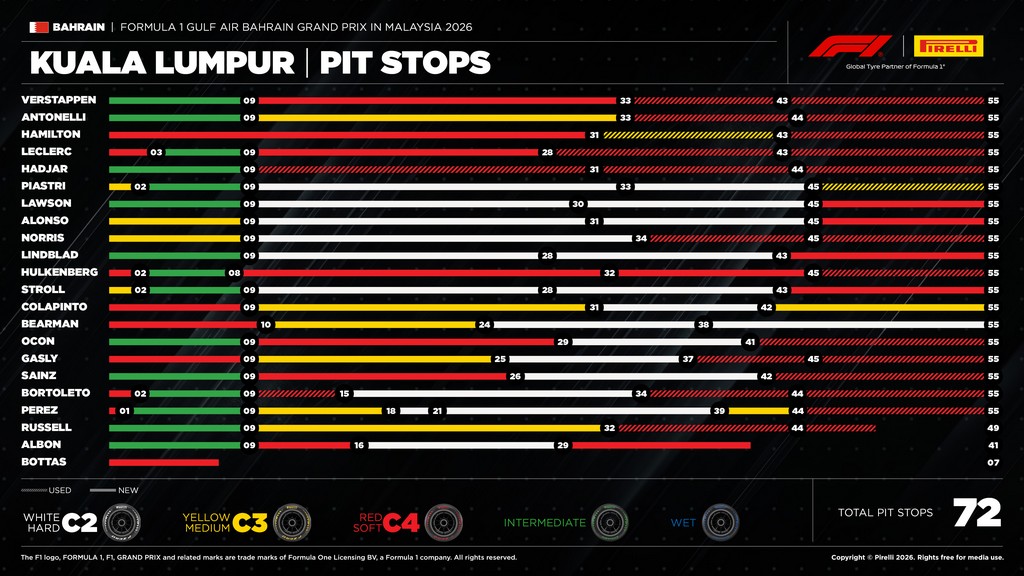
From the opening laps it was clear that the track was still too wet for slick tyres. A further six drivers therefore quickly pitted to switch to Intermediates. After nine laps, the Safety Car was deployed following Valtteri Bottas’ off-track excursion. At the restart, with the asphalt almost dry, all drivers returned to action on slick tyres. Over the course of the race, every compound in the range was used except the Full Wet.
Verstappen quickly built a margin over the two Mercedes drivers but saw his advantage wiped out by a Virtual Safety Car that was later upgraded to a full Safety Car. The Red Bull driver had in fact stopped ten laps before the neutralisation to fit a set of Softs. Both he and Kimi Antonelli, who eventually finished second, took advantage of the VSC to make an additional stop and fit another set of used Softs.
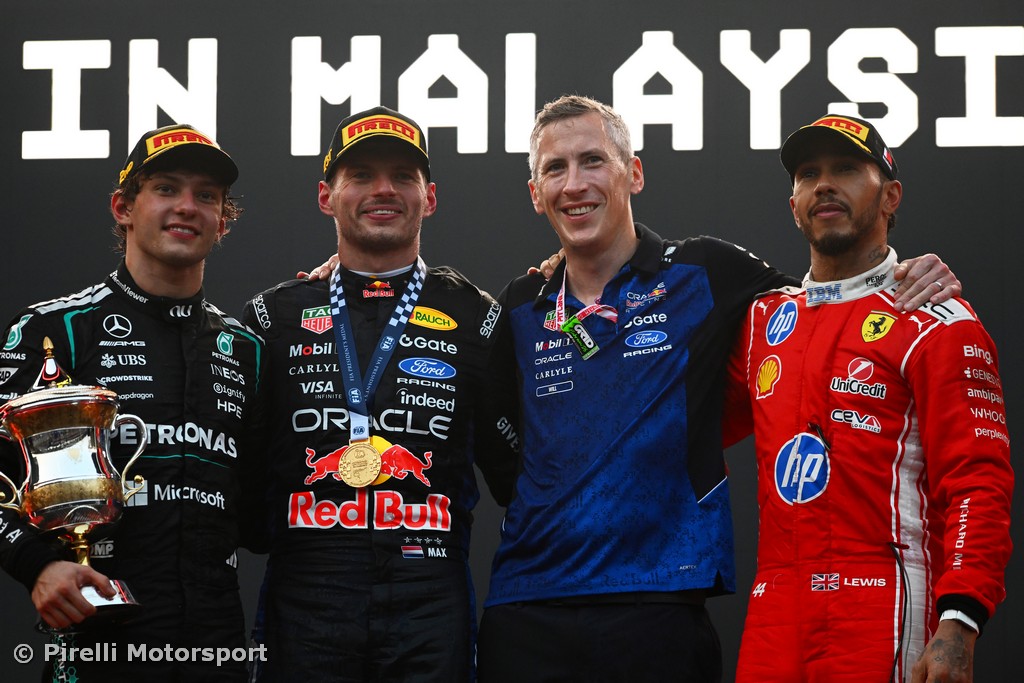
In the closing laps, Verstappen managed to hold off Antonelli and secure the victory. Lewis Hamilton finished third for Ferrari. The Ferrari driver was one of the few not to use Intermediates, choosing instead to start directly on Softs, on which he completed 31 laps. He then switched to a used set of Mediums before making a final stop during the Virtual Safety Car period for a set of used Softs, which he ran to the chequered flag.
Antonelli therefore followed an Intermediate-Medium-Soft-Soft strategy, while Verstappen opted for Intermediate-Soft-Soft-Soft, with Hamilton completing the race on Soft-Medium-Soft. The Sepang podium therefore featured three drivers from three different teams, each using a different strategy.
DARIO MARRAFUSCHI – PIRELLI MOTORSPORT DIRECTOR
“Sepang provided the first real opportunity this season to see significant use of the Intermediate tyre. In the conditions encountered today, its performance was positive, delivering a high level of grip and consistent performance throughout its stint length. In the closing laps, as the track continued to dry, a slight amount of graining appeared on the wet-weather tyres, although there were no particular wear concerns despite the highly abrasive surface.
The environmental conditions played a decisive role in the Malaysian Grand Prix. Temperatures were noticeably lower than those recorded in previous days and, following the downpour before the start, the track remained damp for much of the race. This helped keep tyre temperatures under control and reduced thermal degradation.
In this scenario, the Soft proved particularly competitive, enabling very long stints and delivering consistent performance, helped by teams gradually bringing it into the operating window tested on Friday. Some drivers managed to cover almost half the race on the softest compound, while the neutralisations prompted many teams to opt for the C4 in the closing stages. Both the Hard and Medium also displayed consistent and predictable behaviour, albeit with lower grip levels than the Soft, confirming themselves as viable options for both the frontrunning teams and those in the midfield.”