
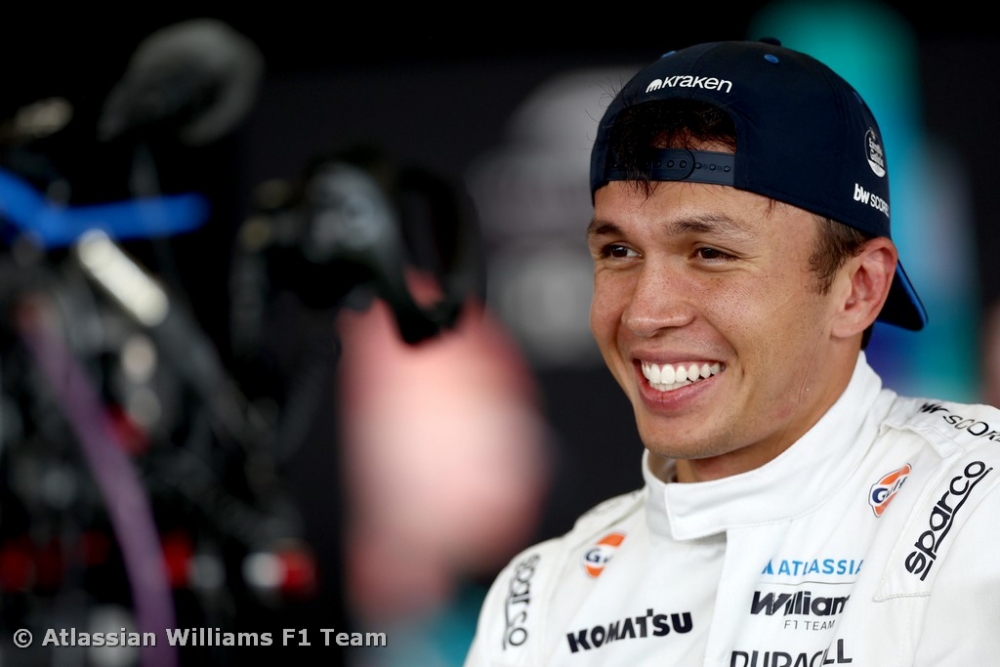
Alex Albon: "Hitting 100 races with this team means a lot to me. It's been quite a journey since I first joined, and it is always nice to think back on some memories over the years and I'm proud of how far we've all come together. There's still so much more I want to achieve with Williams and in F1, and this weekend is just about doing the best job possible as usual and pushing for the best result we can get. Here's to the next 100."
Meanwhile, Paul Williams, Chief Trackside Engineer, looks at the technical factors that will shape the weekend.
What are the key technical challenges of the Hungaroring?
A downforce-dominated circuit - the Hungaroring is low-speed overall, but the high-speed T8-11 section makes aerodynamic load the key performance differentiator this weekend, with power and drag playing a much smaller role than at most venues
Tyre management is critical - it's traditionally a demanding track for the rear tyres, particularly in hot conditions
How do the 2026 regulations influence the approach this weekend?
Budapest is a more straightforward energy management circuit compared to Spa last weekend
It's the lowest energy-sensitive track we've visited apart from Monaco
Four straight-line-mode zones have been added for 2026, all of which remain active in the wet, albeit with delayed activation points
What are the tyre challenges of the circuit?
Softest compound allocation, well suited to the high energy density track with a high traction bias, but leads to rear overheating limitation and high wear
Qualifying: tricky to prepare tyres over the short lap, requiring careful out-lap prep and traffic management
Grand Prix: a high level of tyre saving is required, most effective in Sector 2 since overtaking elsewhere is very difficult. Tyres only get thermal respite on the straight into Turn 1
What are the strategic considerations for the race?
All compounds are suitable race tyres, but medium and hard are better for long stints - expect a mix of tyre choices across the field
We expect a 2-stop race with moderate degradation, though a relatively small 20% decrease in tyre degradation would be enough to move the field to a 1-stop
Third-hardest overtaking of the year - overtaking is very difficult, particularly when the tyre advantage is small
SC and VSC probabilities are low, at 20% each